Health note: This article is for general educational purposes and is not medical advice. Talk with your doctor or another qualified health professional about your own situation, especially if you have a medical condition or take medication.
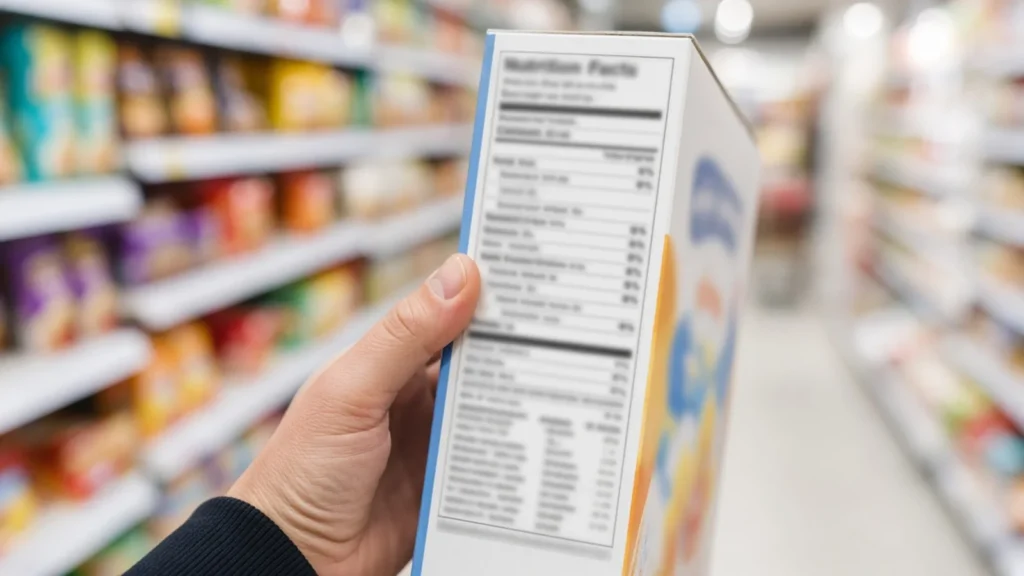
Nutrition labels are printed on almost every packaged food, yet many people glance at the calories and move on, or skip the label entirely. Learning to read a label properly takes only a few minutes and can help you compare products, spot added sugars and sodium, and make choices that fit your health goals, whether you are managing blood pressure, trying to prevent diabetes, watching your weight, or simply trying to eat better.
This guide walks through the U.S. Nutrition Facts label step by step, explains the ingredients list and common marketing claims, and offers a quick method you can use in the grocery aisle.
Start With the Serving Size
Every number on the Nutrition Facts panel is based on the serving size listed at the top. This is the most common place people go wrong. If the label says a serving is one cup and you eat two cups, you need to double every number, including calories, sodium, and sugar.
- Check “servings per container.” A bottle or bag that looks like a single portion may contain two or more servings.
- Some packages show a dual-column label with numbers for one serving and for the whole package, which makes this easier.
- Serving sizes on labels are meant to reflect amounts people typically eat; they are not recommendations for how much you should eat.
Calories
Calories measure how much energy you get from a serving. Your needs depend on age, sex, body size, and activity level. Rather than focusing only on calories, look at what those calories come with: fiber, protein, and nutrients, or mostly sugar, refined starch, and saturated fat.
Understanding Percent Daily Value (%DV)
The %DV shows how much a nutrient in one serving contributes to a total daily diet, based on a general reference amount. A widely used rule of thumb from the U.S. Food and Drug Administration is:
- 5% DV or less per serving is considered low.
- 20% DV or more per serving is considered high.
Use this to aim high for nutrients you want more of, such as fiber, vitamin D, calcium, iron, and potassium, and low for nutrients you want to limit, such as saturated fat, sodium, and added sugars.
Nutrients to Limit
Saturated fat and trans fat
Diets high in saturated fat are associated with higher LDL cholesterol for many people. Artificial trans fats have largely been removed from the U.S. food supply, but checking for “partially hydrogenated oils” in the ingredients is still a good habit. See our guide to understanding cholesterol.
Sodium
Most dietary sodium comes from packaged and restaurant foods. Bread, soups, sauces, deli meats, frozen meals, and snack foods can all be significant sources. Comparing labels between brands can reveal large differences. Lower sodium intake can help with blood pressure; read our guide on lowering blood pressure with everyday habits.
Added sugars
The label lists “Total Sugars” and, beneath it, “Includes Added Sugars.” Total sugars include naturally occurring sugars in milk and fruit; added sugars are those added during processing, such as table sugar, syrups, and honey. Dietary guidelines recommend limiting added sugars. Flavored yogurts, cereals, granola bars, sauces, and drinks are common sources.
Nutrients to Get Enough Of
Dietary fiber
Fiber supports digestion, helps you feel full, and can help steady blood sugar and support healthy cholesterol levels. Many people don’t get enough. Whole grains, beans, vegetables, fruits, nuts, and seeds are good sources.
Protein
Protein is listed in grams. It’s important for muscles and satiety. Most people get enough overall, but spreading it across meals can be helpful, especially for older adults and those doing strength training.
Vitamins and minerals
The current label lists vitamin D, calcium, iron, and potassium, which many people don’t get in adequate amounts. Higher %DV values for these are generally a plus.
Reading the Ingredients List
Ingredients are listed in descending order by weight. The first few ingredients make up most of the product.
- Look for whole foods first: In a bread or cereal, “whole wheat flour” or “whole grain oats” as the first ingredient is a good sign.
- Spot hidden sugars: Sugar can appear under many names, such as cane sugar, corn syrup, dextrose, maltose, fruit juice concentrate, honey, and agave. Several sugar sources spread across the list can add up.
- Check for allergens: U.S. labels must identify major food allergens.
- Shorter isn’t always better: A long list can include healthy ingredients like spices and vegetables, and a short list can still be mostly sugar.
Decoding Front-of-Package Claims
Package fronts are marketing space. Some terms have regulated definitions, while others are vague.
- “Low fat” or “reduced sugar”: Regulated terms, but the product may compensate with other ingredients. Always check the full label.
- “Multigrain” or “made with whole grains”: Doesn’t necessarily mean mostly whole grain. Look at the ingredients.
- “Natural”: Loosely defined and not a guarantee of nutritional quality.
- “No added sugar”: The product may still be high in natural sugars, such as dried fruit or juice.
- “Healthy”: In the U.S., use of this claim is regulated, but it is still best to check the panel yourself.
A Quick 30-Second Label Check
- Serving size: How many servings will I actually eat?
- Added sugars and sodium: Are they low (around 5% DV) or high (20% DV or more)?
- Fiber and protein: Does the product provide some?
- Saturated fat: Is it low relative to similar products?
- First three ingredients: Are they whole foods?
Use this check to compare two similar products side by side, such as two breakfast cereals or two pasta sauces. Often the healthier choice tastes similar and costs about the same.
Examples of Smart Comparisons
- Bread: Choose whole grain first ingredient, more fiber, and lower sodium.
- Yogurt: Compare added sugars; plain yogurt with your own fruit often has much less.
- Breakfast cereal: Look for more fiber and fewer added sugars per serving.
- Soup and sauces: Compare sodium carefully, and consider “low sodium” versions.
- Snack bars: Many are similar to candy bars; compare sugar, fiber, and protein.
Reading labels is also a budget skill. Our guide to heart-healthy eating on a budget shows how to combine label reading with smart shopping.
Label Reading for Specific Goals
If you are watching blood pressure, sodium is the number to compare first. If you are trying to manage blood sugar, focus on total carbohydrates, fiber, and added sugars. If weight management is your goal, pay attention to serving size and calories, and favor foods with more protein and fiber that keep you full. People with food allergies should read the allergen statement every time, since recipes can change. If your doctor or dietitian has given you specific targets, the label is the tool that helps you meet them.
Frequently Asked Questions
Are the %DV numbers right for everyone?
They are based on general reference amounts. Your needs may be higher or lower, but the %DV is still useful for comparing foods and judging whether a food is high or low in a nutrient.
What’s the difference between “sugar-free” and “no added sugar”?
“Sugar-free” means very little sugar per serving. “No added sugar” means no sugars were added during processing, but the food may contain natural sugars.
Do fresh fruits and vegetables need labels?
Most fresh produce doesn’t carry a Nutrition Facts label. Whole, minimally processed foods are generally excellent choices.
Should I count calories or read labels for quality?
Both can be useful. Many people find focusing on quality, more fiber and protein and less added sugar and sodium, naturally helps with portion control.
Conclusion
Reading nutrition labels is a simple skill that pays off every time you shop. Start with the serving size, use the 5% and 20% rule for %DV, limit added sugars, sodium, and saturated fat, look for fiber and protein, and check the first few ingredients. Treat front-of-package claims with healthy skepticism. With a little practice, a quick label check becomes second nature.