Health note: This article is for general educational purposes and is not medical advice. Talk with your doctor or another qualified health professional about your own situation, especially if you have a medical condition or take medication.
Crash diets promise fast results: lose a lot of weight in a few weeks by cutting out entire food groups, living on shakes, or eating very few calories. Many people do lose weight quickly on these plans, but the results rarely last. Extreme restriction is hard to maintain, often leaves people hungry and tired, and can lead to regaining the weight once the diet ends.
This guide explains why crash diets tend to fail and outlines a practical, sustainable approach to weight loss built on habits you can keep for life.
Why Crash Diets Usually Don’t Last
- They’re hard to sustain: Very restrictive plans conflict with social life, work, and normal hunger.
- Hunger increases: Severe restriction can intensify hunger and cravings.
- Muscle loss: Rapid weight loss without enough protein and strength training can include loss of muscle, which matters for strength and metabolism.
- Metabolic adaptation: As you lose weight, your body needs fewer calories, and some adaptation can make continued loss harder.
- No skills learned: Following a rigid plan doesn’t teach how to eat well in everyday situations, so old habits return.
Very low-calorie diets can also cause side effects and should only be done under medical supervision when recommended.
What Sustainable Weight Loss Looks Like
Many health organizations suggest gradual weight loss at a modest pace for most people. For people with overweight, losing even a modest percentage of body weight can improve blood pressure, blood sugar, and cholesterol. The focus is on consistent habits rather than perfection.
Step 1: Set Realistic, Specific Goals
Instead of “lose a lot of weight fast,” set process goals you control:
- “I’ll eat vegetables with lunch and dinner on weekdays.”
- “I’ll walk for 20 minutes after dinner five days a week.”
- “I’ll replace soda with sparkling water.”
Process goals build the habits that lead to outcome goals.
Step 2: Build Satisfying, Balanced Meals
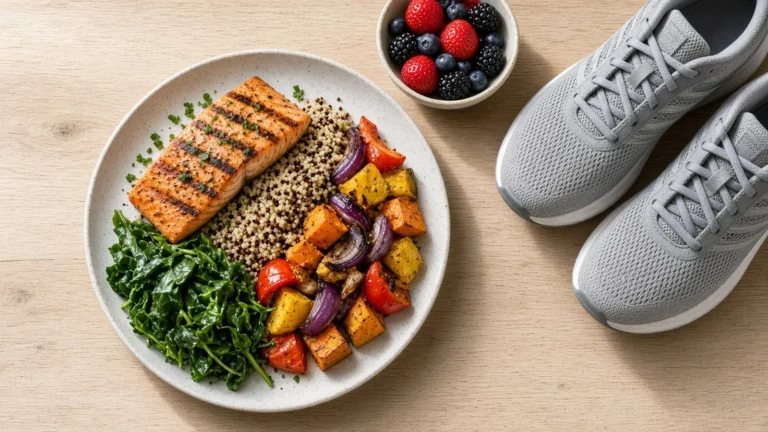
A balanced plate helps you feel full on fewer calories.
- Half the plate: Vegetables and salad.
- A quarter: Lean protein, such as fish, poultry, eggs, tofu, beans, or Greek yogurt.
- A quarter: Whole grains or starchy vegetables, such as brown rice, oats, potatoes, or whole-grain bread.
- A small amount of healthy fat: Olive oil, nuts, seeds, or avocado.
Why protein and fiber matter
Protein and fiber help you feel full and satisfied. Protein also helps preserve muscle during weight loss. Fiber-rich foods like vegetables, fruit, legumes, and whole grains add volume with relatively few calories.
Step 3: Manage Portions Without Obsessing
- Use smaller plates and bowls.
- Serve food in the kitchen instead of placing large serving dishes on the table.
- Read serving sizes on labels; see how to read nutrition labels.
- Eat slowly and pause midway to check hunger.
- Pre-portion snacks rather than eating from the bag.
Some people find tracking food intake for a few weeks helpful to build awareness. Others prefer simpler methods. Choose what works for you.
Step 4: Rethink Drinks and Snacks
Sugary drinks, specialty coffees, and alcohol can add significant calories without making you feel full. Switching to water, unsweetened tea, or coffee with less sugar is often one of the easiest wins. Plan snacks that include protein or fiber, like fruit with nuts, yogurt, or vegetables with hummus.
Step 5: Move More in Ways You Enjoy
Exercise supports weight loss and is especially important for maintaining weight loss and preserving muscle.
- Aerobic activity: Walking, cycling, swimming, or dancing. Start with our walking guide.
- Strength training: At least two days a week. See our beginner strength plan.
- Everyday movement: Taking stairs, standing breaks, and walking errands add up.
Step 6: Sleep and Stress Matter
Short sleep is associated with increased appetite and cravings, and chronic stress can lead to emotional eating. Prioritizing sleep and developing non-food ways to cope with stress support weight goals. Read how to build a sleep routine and managing stress at work.
Step 7: Plan for Real Life
Eating out
Look at menus ahead of time, choose grilled or baked options, ask for sauces on the side, and consider sharing dishes or boxing half.
Social events
Eat a balanced snack beforehand, focus on conversation, and enjoy favorite foods in reasonable portions without guilt.
Weekends and holidays
Keep some routines, like morning walks, and get back to your usual habits at the next meal rather than waiting for Monday.
Step 8: Track Progress Beyond the Scale
Weight fluctuates daily due to water, salt, and hormones. Consider tracking several measures:
- Weekly average weight rather than daily numbers.
- Waist measurement.
- How clothes fit.
- Energy, sleep, and mood.
- Fitness improvements, like walking farther or lifting more.
Handling Plateaus
Plateaus are normal. When progress stalls, review portion sizes and drinks, add a bit more activity or strength training, check sleep and stress, and be patient. Small adjustments often restart progress.
When to Get Professional Help
A doctor or registered dietitian can help personalize a plan, especially if you have medical conditions like diabetes, heart disease, or a history of disordered eating. For some people, clinicians may discuss additional options such as medications or other treatments. Seek help if you notice unhealthy patterns like severe restriction, bingeing, or compensating behaviors.
A Sample Day of Balanced Eating
- Breakfast: Greek yogurt with berries, oats, and a sprinkle of nuts, or eggs with whole-grain toast and tomatoes.
- Lunch: A large salad or grain bowl with leafy greens, chickpeas or chicken, roasted vegetables, and an olive oil dressing.
- Snack: An apple with a small handful of almonds, or carrots and hummus.
- Dinner: Baked fish or tofu, a generous serving of steamed or roasted vegetables, and a modest portion of brown rice or potatoes.
- Drinks: Water, sparkling water, unsweetened tea, or coffee with little or no sugar.
This is only an example. Adjust portions to your hunger, activity level, and preferences, and include foods from your own culture and traditions. Sustainable eating patterns are flexible enough to fit real life. For affordable ideas, see heart-healthy eating on a budget.
Mindset Shifts That Help
Thinking in terms of “good” and “bad” foods or “on” and “off” a diet often leads to all-or-nothing cycles. A more helpful approach is to aim for consistency most of the time and accept that some meals will be less balanced. One indulgent meal doesn’t undo progress, just as one salad doesn’t create it. Focus on what you can add, such as more vegetables, more water, and more movement, rather than only on what you’re cutting.
Frequently Asked Questions
How fast should I lose weight?
Gradual loss is generally recommended for most people because it’s more sustainable and better preserves muscle. Your clinician can advise what’s appropriate for you.
Do I need to cut carbs completely?
No. Many eating patterns can work. Choosing high-fiber carbohydrates and moderating refined starches and sugars is a balanced approach.
Is intermittent fasting a good option?
Some people find time-restricted eating helps them eat less; others don’t. It’s not necessary for weight loss and may not suit people with certain conditions. Discuss with your clinician.
Can I lose weight without exercise?
Diet changes typically drive most weight loss, but exercise is important for health, muscle preservation, and maintaining weight loss.
Conclusion
Healthy weight loss doesn’t require extreme measures. Focus on balanced, satisfying meals with plenty of vegetables, protein, and fiber; manage portions; rethink drinks; move more; sleep well; and plan for real-life situations. Progress may be slower than a crash diet promises, but it’s far more likely to last, and the habits you build will benefit your health for years.